# pyAudioAnalysis
**Repository Path**: whitecells/py-audio-analysis
## Basic Information
- **Project Name**: pyAudioAnalysis
- **Description**: No description available
- **Primary Language**: Unknown
- **License**: Apache-2.0
- **Default Branch**: master
- **Homepage**: None
- **GVP Project**: No
## Statistics
- **Stars**: 0
- **Forks**: 0
- **Created**: 2026-01-29
- **Last Updated**: 2026-01-29
## Categories & Tags
**Categories**: Uncategorized
**Tags**: None
## README
#  A Python library for audio feature extraction, classification, segmentation and applications
*This is general info. Click [here](https://github.com/tyiannak/pyAudioAnalysis/wiki) for the complete wiki and [here](https://hackernoon.com/audio-handling-basics-how-to-process-audio-files-using-python-cli-jo283u3y) for a more generic intro to audio data handling*
## News
* [2025-03-29] Check [Behavioral Signals Python SDK](https://github.com/BehavioralSignalTechnologies/behavioralsignals-python) that demonstrates how to use [Behavioral Signals' API](https://platform.behavioralsignals.com/) to send speech data and retrieve predictions related to emotions and behaviors using Python code. It works in both batch and streaming mode. Now [Behavioral Signals' API](https://platform.behavioralsignals.com/) also supports a Speaker Agnostic Deep Fake Detector.
* [2021-08-06] [deep-audio-features](https://github.com/tyiannak/deep_audio_features) deep audio classification and feature extraction using CNNs and Pytorch
* Check out [paura](https://github.com/tyiannak/paura) a Python script for realtime recording and analysis of audio data
## General
pyAudioAnalysis is a Python library covering a wide range of audio analysis tasks. Through pyAudioAnalysis you can:
* Extract audio *features* and representations (e.g. mfccs, spectrogram, chromagram)
* *Train*, parameter tune and *evaluate* classifiers of audio segments
* *Classify* unknown sounds
* *Detect* audio events and exclude silence periods from long recordings
* Perform *supervised segmentation* (joint segmentation - classification)
* Perform *unsupervised segmentation* (e.g. speaker diarization) and extract audio *thumbnails*
* Train and use *audio regression* models (example application: emotion recognition)
* Apply dimensionality reduction to *visualize* audio data and content similarities
## Installation
* Clone the source of this library: `git clone https://github.com/tyiannak/pyAudioAnalysis.git`
* Install dependencies: `pip install -r ./requirements.txt `
* Install using pip: `pip install -e .`
## An audio classification example
> More examples and detailed tutorials can be found [at the wiki](https://github.com/tyiannak/pyAudioAnalysis/wiki)
pyAudioAnalysis provides easy-to-call wrappers to execute audio analysis tasks. Eg, this code first trains an audio segment classifier, given a set of WAV files stored in folders (each folder representing a different class) and then the trained classifier is used to classify an unknown audio WAV file
```python
from pyAudioAnalysis import audioTrainTest as aT
aT.extract_features_and_train(["classifierData/music","classifierData/speech"], 1.0, 1.0, aT.shortTermWindow, aT.shortTermStep, "svm", "svmSMtemp", False)
aT.file_classification("data/doremi.wav", "svmSMtemp","svm")
```
>Result:
(0.0, array([ 0.90156761, 0.09843239]), ['music', 'speech'])
In addition, command-line support is provided for all functionalities. E.g. the following command extracts the spectrogram of an audio signal stored in a WAV file: `python audioAnalysis.py fileSpectrogram -i data/doremi.wav`
## Further reading
Apart from this README file, to bettern understand how to use this library one should read the following:
* [Audio Handling Basics: Process Audio Files In Command-Line or Python](https://hackernoon.com/audio-handling-basics-how-to-process-audio-files-using-python-cli-jo283u3y), if you want to learn how to handle audio files from command line, and some basic programming on audio signal processing. Start with that if you don't know anything about audio.
* [Intro to Audio Analysis: Recognizing Sounds Using Machine Learning](https://hackernoon.com/intro-to-audio-analysis-recognizing-sounds-using-machine-learning-qy2r3ufl) This goes a bit deeper than the previous article, by providing a complete intro to theory and practice of audio feature extraction, classification and segmentation (includes many Python examples).
* [The library's wiki](https://github.com/tyiannak/pyAudioAnalysis/wiki)
* [How to Use Machine Learning to Color Your Lighting Based on Music Mood](https://hackernoon.com/how-to-use-machine-learning-to-color-your-lighting-based-on-music-mood-bi163u8l). An interesting use-case of using this lib to train a real-time music mood estimator.
* A more general and theoretic description of the adopted methods (along with several experiments on particular use-cases) is presented [in this publication](http://journals.plos.org/plosone/article?id=10.1371/journal.pone.0144610). *Please use the following citation when citing pyAudioAnalysis in your research work*:
```python
@article{giannakopoulos2015pyaudioanalysis,
title={pyAudioAnalysis: An Open-Source Python Library for Audio Signal Analysis},
author={Giannakopoulos, Theodoros},
journal={PloS one},
volume={10},
number={12},
year={2015},
publisher={Public Library of Science}
}
```
For Matlab-related audio analysis material check [this book](http://www.amazon.com/Introduction-Audio-Analysis-MATLAB%C2%AE-Approach/dp/0080993885).
## Author
A Python library for audio feature extraction, classification, segmentation and applications
*This is general info. Click [here](https://github.com/tyiannak/pyAudioAnalysis/wiki) for the complete wiki and [here](https://hackernoon.com/audio-handling-basics-how-to-process-audio-files-using-python-cli-jo283u3y) for a more generic intro to audio data handling*
## News
* [2025-03-29] Check [Behavioral Signals Python SDK](https://github.com/BehavioralSignalTechnologies/behavioralsignals-python) that demonstrates how to use [Behavioral Signals' API](https://platform.behavioralsignals.com/) to send speech data and retrieve predictions related to emotions and behaviors using Python code. It works in both batch and streaming mode. Now [Behavioral Signals' API](https://platform.behavioralsignals.com/) also supports a Speaker Agnostic Deep Fake Detector.
* [2021-08-06] [deep-audio-features](https://github.com/tyiannak/deep_audio_features) deep audio classification and feature extraction using CNNs and Pytorch
* Check out [paura](https://github.com/tyiannak/paura) a Python script for realtime recording and analysis of audio data
## General
pyAudioAnalysis is a Python library covering a wide range of audio analysis tasks. Through pyAudioAnalysis you can:
* Extract audio *features* and representations (e.g. mfccs, spectrogram, chromagram)
* *Train*, parameter tune and *evaluate* classifiers of audio segments
* *Classify* unknown sounds
* *Detect* audio events and exclude silence periods from long recordings
* Perform *supervised segmentation* (joint segmentation - classification)
* Perform *unsupervised segmentation* (e.g. speaker diarization) and extract audio *thumbnails*
* Train and use *audio regression* models (example application: emotion recognition)
* Apply dimensionality reduction to *visualize* audio data and content similarities
## Installation
* Clone the source of this library: `git clone https://github.com/tyiannak/pyAudioAnalysis.git`
* Install dependencies: `pip install -r ./requirements.txt `
* Install using pip: `pip install -e .`
## An audio classification example
> More examples and detailed tutorials can be found [at the wiki](https://github.com/tyiannak/pyAudioAnalysis/wiki)
pyAudioAnalysis provides easy-to-call wrappers to execute audio analysis tasks. Eg, this code first trains an audio segment classifier, given a set of WAV files stored in folders (each folder representing a different class) and then the trained classifier is used to classify an unknown audio WAV file
```python
from pyAudioAnalysis import audioTrainTest as aT
aT.extract_features_and_train(["classifierData/music","classifierData/speech"], 1.0, 1.0, aT.shortTermWindow, aT.shortTermStep, "svm", "svmSMtemp", False)
aT.file_classification("data/doremi.wav", "svmSMtemp","svm")
```
>Result:
(0.0, array([ 0.90156761, 0.09843239]), ['music', 'speech'])
In addition, command-line support is provided for all functionalities. E.g. the following command extracts the spectrogram of an audio signal stored in a WAV file: `python audioAnalysis.py fileSpectrogram -i data/doremi.wav`
## Further reading
Apart from this README file, to bettern understand how to use this library one should read the following:
* [Audio Handling Basics: Process Audio Files In Command-Line or Python](https://hackernoon.com/audio-handling-basics-how-to-process-audio-files-using-python-cli-jo283u3y), if you want to learn how to handle audio files from command line, and some basic programming on audio signal processing. Start with that if you don't know anything about audio.
* [Intro to Audio Analysis: Recognizing Sounds Using Machine Learning](https://hackernoon.com/intro-to-audio-analysis-recognizing-sounds-using-machine-learning-qy2r3ufl) This goes a bit deeper than the previous article, by providing a complete intro to theory and practice of audio feature extraction, classification and segmentation (includes many Python examples).
* [The library's wiki](https://github.com/tyiannak/pyAudioAnalysis/wiki)
* [How to Use Machine Learning to Color Your Lighting Based on Music Mood](https://hackernoon.com/how-to-use-machine-learning-to-color-your-lighting-based-on-music-mood-bi163u8l). An interesting use-case of using this lib to train a real-time music mood estimator.
* A more general and theoretic description of the adopted methods (along with several experiments on particular use-cases) is presented [in this publication](http://journals.plos.org/plosone/article?id=10.1371/journal.pone.0144610). *Please use the following citation when citing pyAudioAnalysis in your research work*:
```python
@article{giannakopoulos2015pyaudioanalysis,
title={pyAudioAnalysis: An Open-Source Python Library for Audio Signal Analysis},
author={Giannakopoulos, Theodoros},
journal={PloS one},
volume={10},
number={12},
year={2015},
publisher={Public Library of Science}
}
```
For Matlab-related audio analysis material check [this book](http://www.amazon.com/Introduction-Audio-Analysis-MATLAB%C2%AE-Approach/dp/0080993885).
## Author
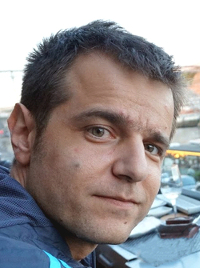 [Theodoros Giannakopoulos](https://tyiannak.github.io),
Principal Researcher of Multimodal Machine Learning at the [Multimedia Analysis Group of the Computational Intelligence Lab (MagCIL)](https://labs-repos.iit.demokritos.gr/MagCIL/index.html) of the Institute of Informatics and Telecommunications, of the National Center for Scientific Research "Demokritos"
[Theodoros Giannakopoulos](https://tyiannak.github.io),
Principal Researcher of Multimodal Machine Learning at the [Multimedia Analysis Group of the Computational Intelligence Lab (MagCIL)](https://labs-repos.iit.demokritos.gr/MagCIL/index.html) of the Institute of Informatics and Telecommunications, of the National Center for Scientific Research "Demokritos"